
Vertical Applications Part 1: Structure, Support, and Storytelling in Concrete
CASTO ©
When vertical cast-in-place concrete is mentioned, most of us immediately picture massive structural walls rising out of deep footings, miles of steel rebar tied in dense grids, and heavy formwork braced in place to hold everything together until the concrete cures and the forms are stripped. That image is absolutely part of the story and represents the backbone of vertical work, the structure behind the skin that we all recognize.
But in themed construction, vertical CIP is not limited to what holds up the building. These materials can also become the skin itself, the surface that carries the theme, communicates the narrative, and gives the space its character. Vertical concrete is both structure and storytelling medium.
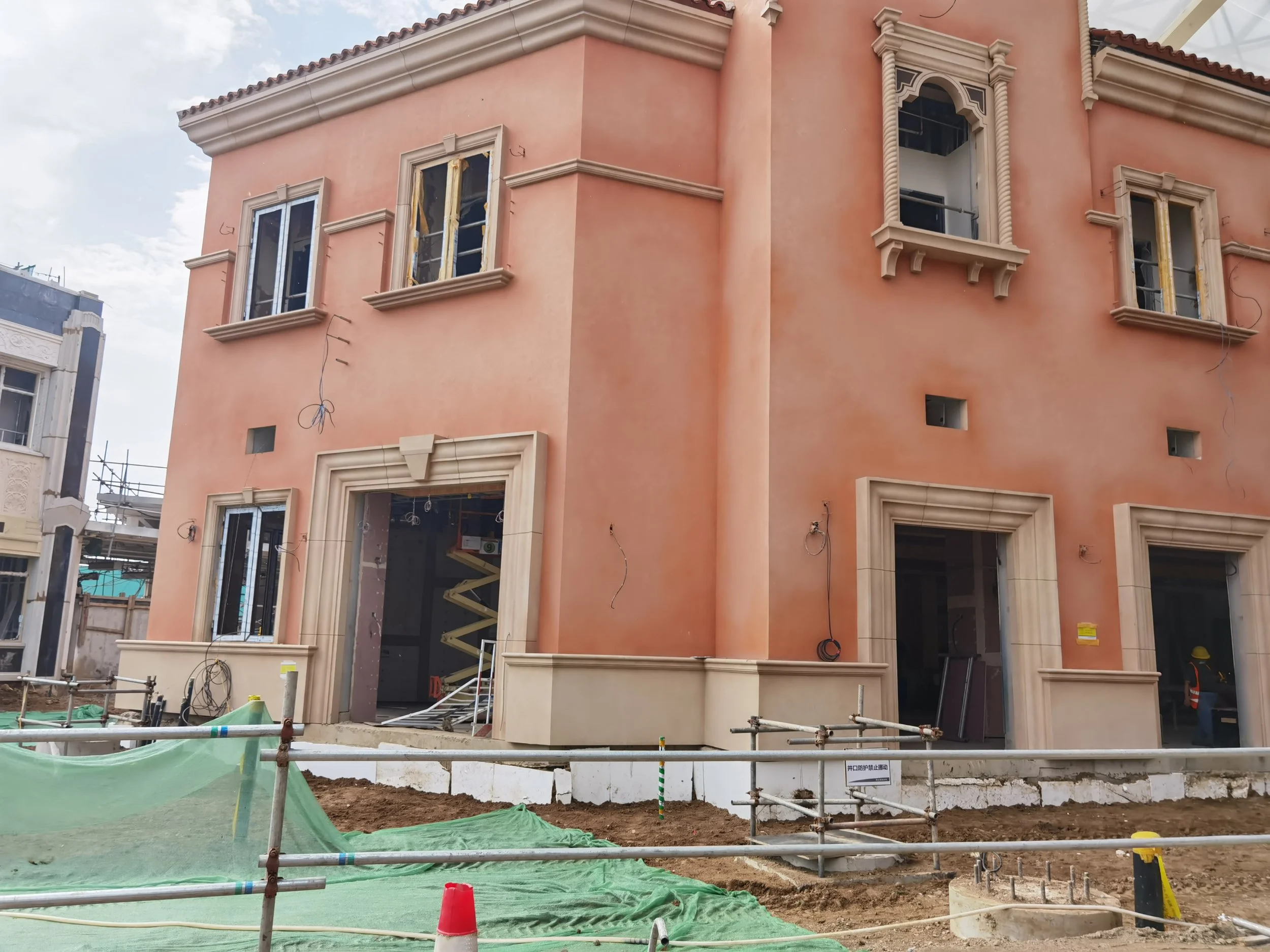
This type of work is one of the most recognizable signatures of themed environments. Towering façades, carved stonework, rock walls, tree trunks, architectural ornaments, show sets, portals, ruins, and more all fall within the world of vertical cast-in-place cementitious applications.
Vertical CIP sits at a point where structure, artistry, and narrative intersect. It is where engineers and artisans meet, where structural logic supports creative expression, and where the wall becomes part of the story rather than just something that holds the roof up.
This is the realm of microtoppings, overlays, and thick-build cementitious systems, ranging anywhere from credit-card thin to three inches thick. And in themed environments, few tools are more versatile or more powerful.
1. How Vertical CIP Fits Within Cast-In-Place Concrete
CASTO ©
In our previous CASTO Corner article, we explored cast-in-place concrete as the backbone of immersive environments. Vertical work sits within that same family, but it plays a very different role than horizontal flatwork. Instead of guiding movement underfoot, vertical CIP becomes the surface guests face head-on. It frames sightlines, shapes architectural identity, and becomes a primary storytelling element.
Vertical CIP is where cast-in-place stops being purely structural and becomes expressive. A wall is no longer just structure; it becomes stone, bark, carved ornament, or the façade of a themed building. It is the canvas that gives a land its texture and tone.
This is what sets vertical work apart in themed construction. It connects the underlying structure to the themed surface, making the wall itself part of the narrative.
2. Understanding Vertical Cast-In-Place Applications
While vertical components in themed construction can be prefabricated or produced off-site, our focus here is on vertical cast-in-place applications. These are cementitious systems that are mixed, placed, shaped, carved, and finished directly in the field. They are built in real time, on real structure, under real environmental conditions. This immediacy is what sets vertical CIP apart.
Vertical cast-in-place does not replace prefabricated systems like GFRC, precast concrete, fiberglass, or modular façade panels. Instead, it works alongside them. But unlike those off-site methods, vertical CIP allows artisans and finishers to respond directly to the environment they are building in. They can follow irregular geometries, adjust planes or textures on the fly, refine proportions as designs evolve, and create surfaces that feel naturally rooted to the structure beneath them.
In themed construction, vertical cast-in-place work appears everywhere you look. It forms carved and sculpted facades, themed plaster over steel frames, rockwork, stacked stone motifs, sculpted trees and roots, interior show set walls, retaining enclosures, portals, ornamentation, and the textured architectural elements that define a land’s identity.
Rather than simply being a construction method, vertical CIP functions as a creative medium of its own. It gives artists the ability to shape story directly into the surface, turning structure into narrative and allowing the wall itself to participate in the themed experience.
3. The Vertical Spectrum: From Credit-Card Thin to Three Inches Thick
CASTO ©
A. Microtoppings and Skim Coats
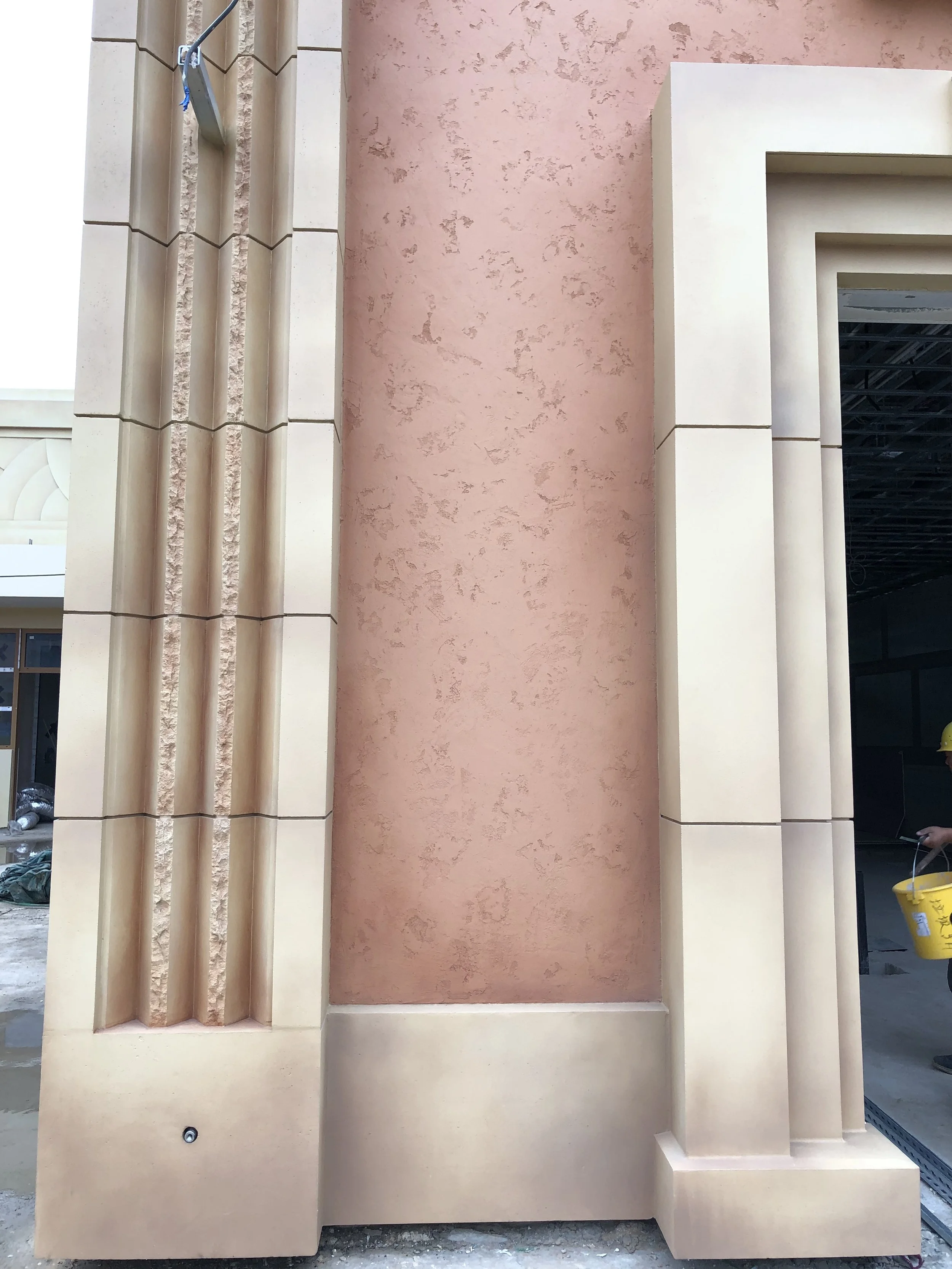
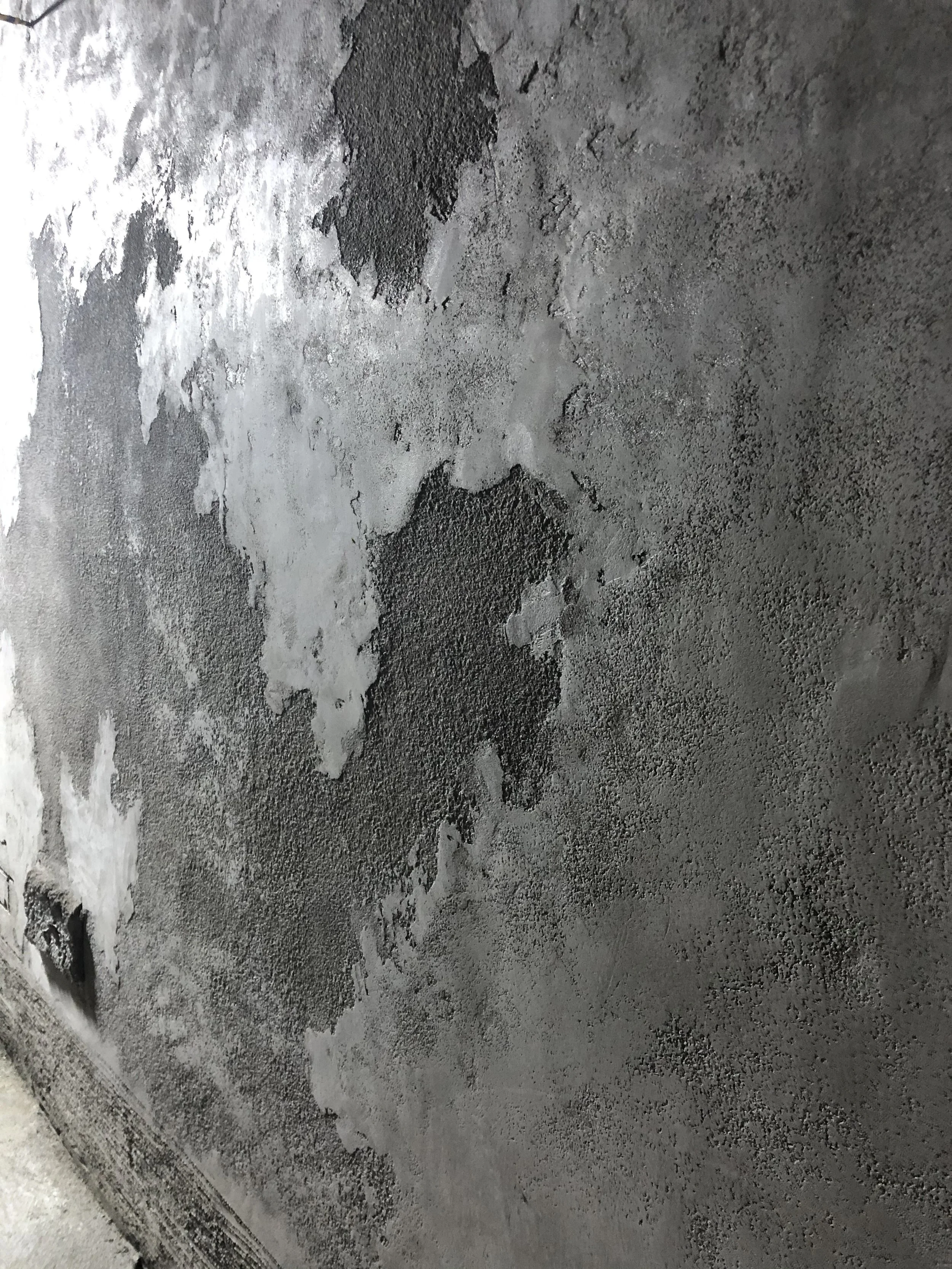
Vertical cast-in-place work spans an enormous spectrum of thickness and artistic capability, and at the thinnest end of that spectrum are microtoppings or most commonly known as venetian plaster. These are ultra-thin cementitious layers, often no thicker than a credit card. They are typically polymerized and modified with resins to increase adhesion, flexibility, and workability, allowing them to bond beautifully to a wide range of substrates.
Despite their minimal thickness, microtoppings carry surprising strength and creative power. The strategic layering of various coats allows for this system to have incredible flexibility and movement that concrete would otherwise lack.
They are used to refine surfaces, correct imperfections, or add subtle artistic expression without altering the underlying structure. In themed environments, these thin-build systems are often used for:
• Smooth plaster-like finishes with a refined architectural feel
• Soft textures or mottled artistic layers that evoke age and history
• Interior scenic walls where depth is suggested rather than carved
• Enhancing or coating CMU, concrete, brick, block, or lath-backed substrates
• Creating uniformity across mixed materials
Because microtoppings are applied in multiple passes, artists can slowly build tone, texture, and character layer by layer. The result is a surface that feels layered and timeless, proving that you do not need thickness to create depth.
B. Thin-Build Overlays
Thin-build overlays represent one of the most versatile categories within vertical cast-in-place work. Though still relatively slim compared to thick-build sculptural systems, these layers introduce enough body to create meaningful texture, pattern, and architectural detailing while remaining lightweight and highly workable.
CASTO ©
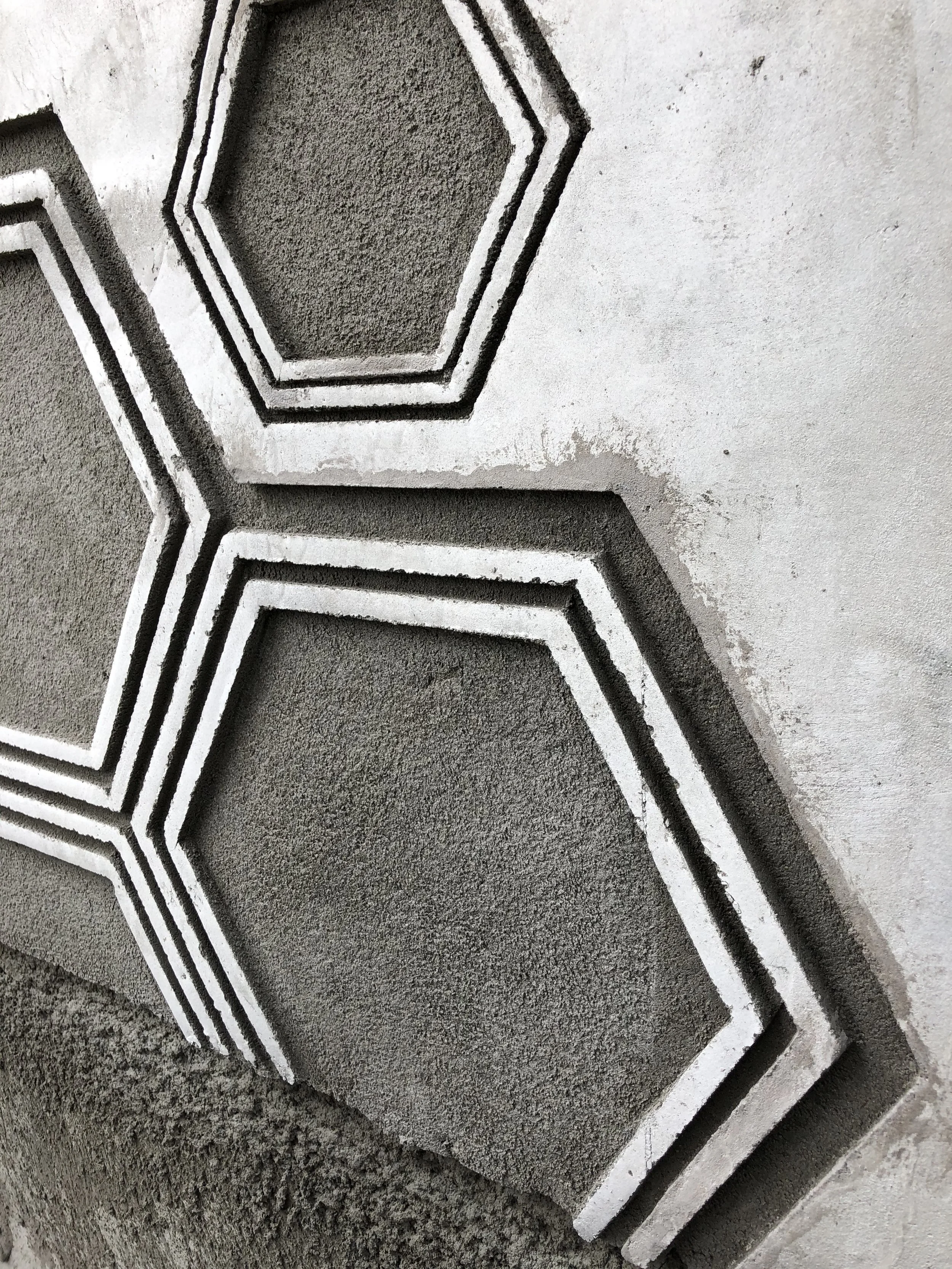
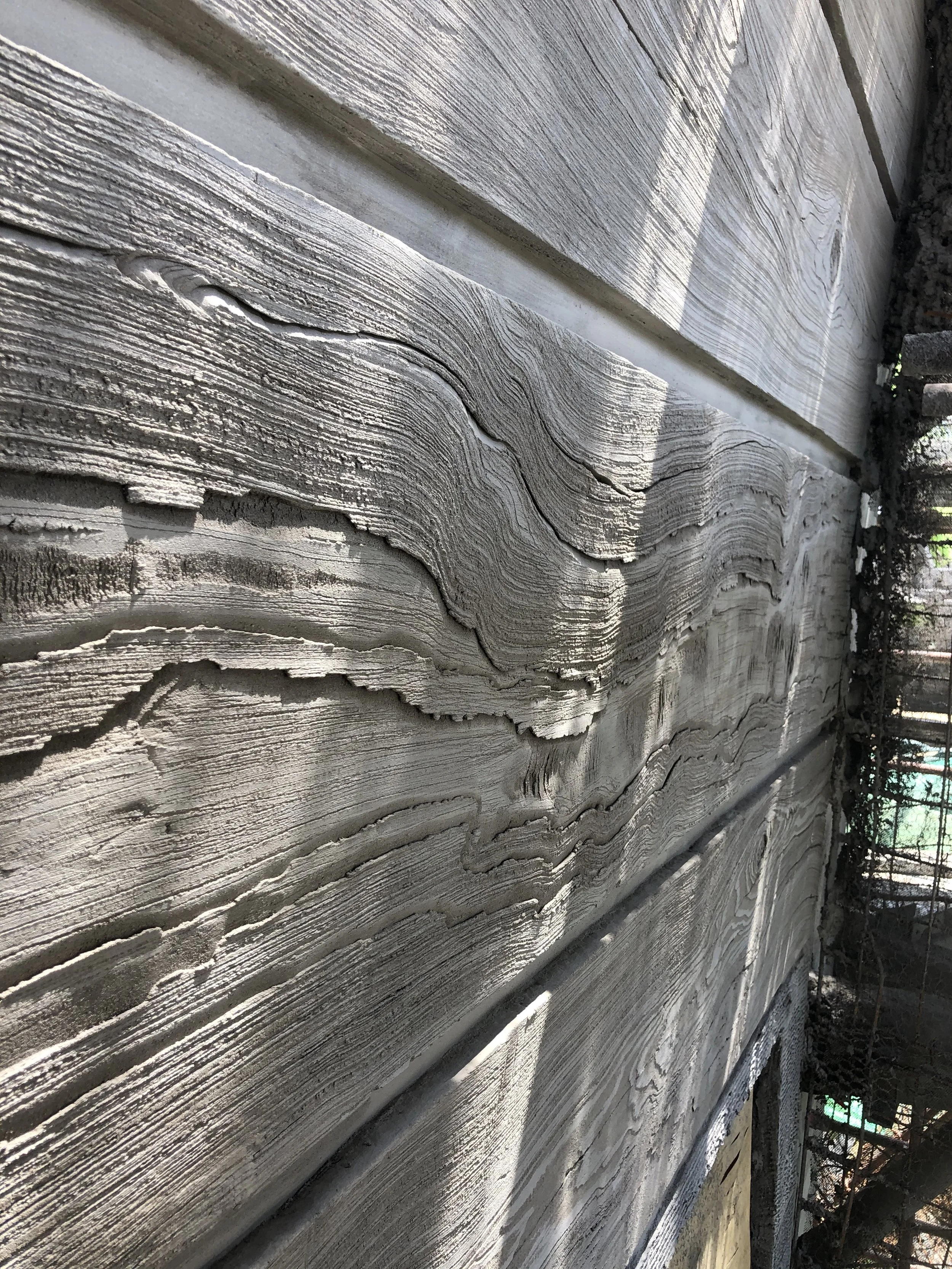
Applied at roughly a quarter to five-eighths of an inch, thin-build overlays sit comfortably between microtoppings and full sculptural plasters. Their thickness allows artisans to incorporate deeper character, be stamped, textured, jointed or carved with precision. Because they are mixed and placed directly in the field, they maintain the immediacy and responsiveness that makes cast-in-place work so valuable in themed construction.
These systems can be finished in countless ways, including:
• Stone block textures with clean or weathered joint lines
• Light stamp patterns that replicate tile, slate, or masonry
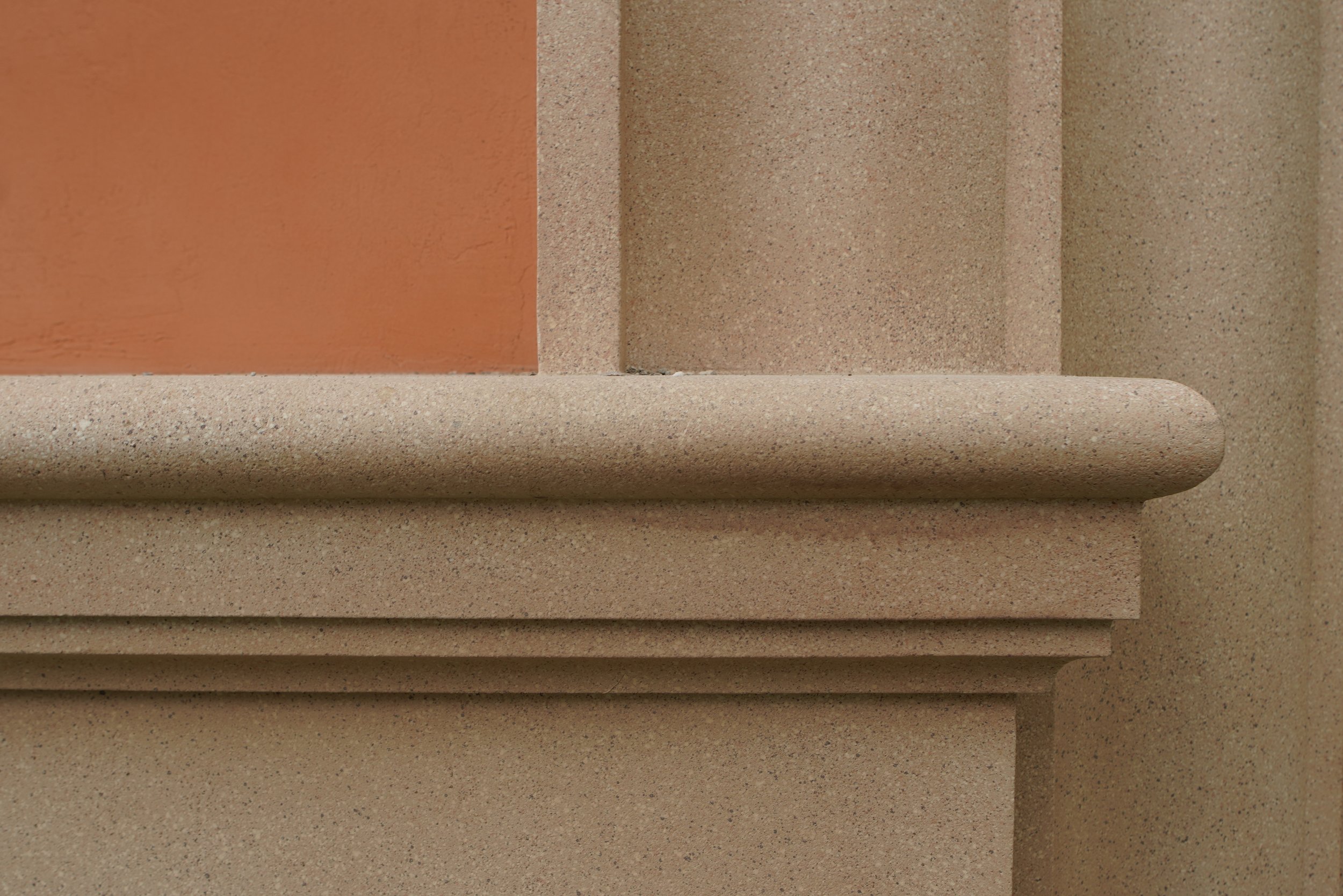
• Exposed aggregate finishes created through washing, sponging, or surface retarders
• Light sculptural details that softly break the plane
• Architectural plaster effects with increased mass and shadow
• Carved or jointed patterns that simulate wood grain, stacked stone, or brick surfaces
Thin-build overlays excel because they strike a rare balance between thickness and finesse. They can be carved for deeper definition, washed or ground to reveal aggregate sparkle, smoothed for refined architectural forms, or hand-textured for more organic scenic effects. Their adaptability makes them a staple in both interior and exterior environments.
C. Thick-Build Systems (Themed Character Plaster)
CASTO ©
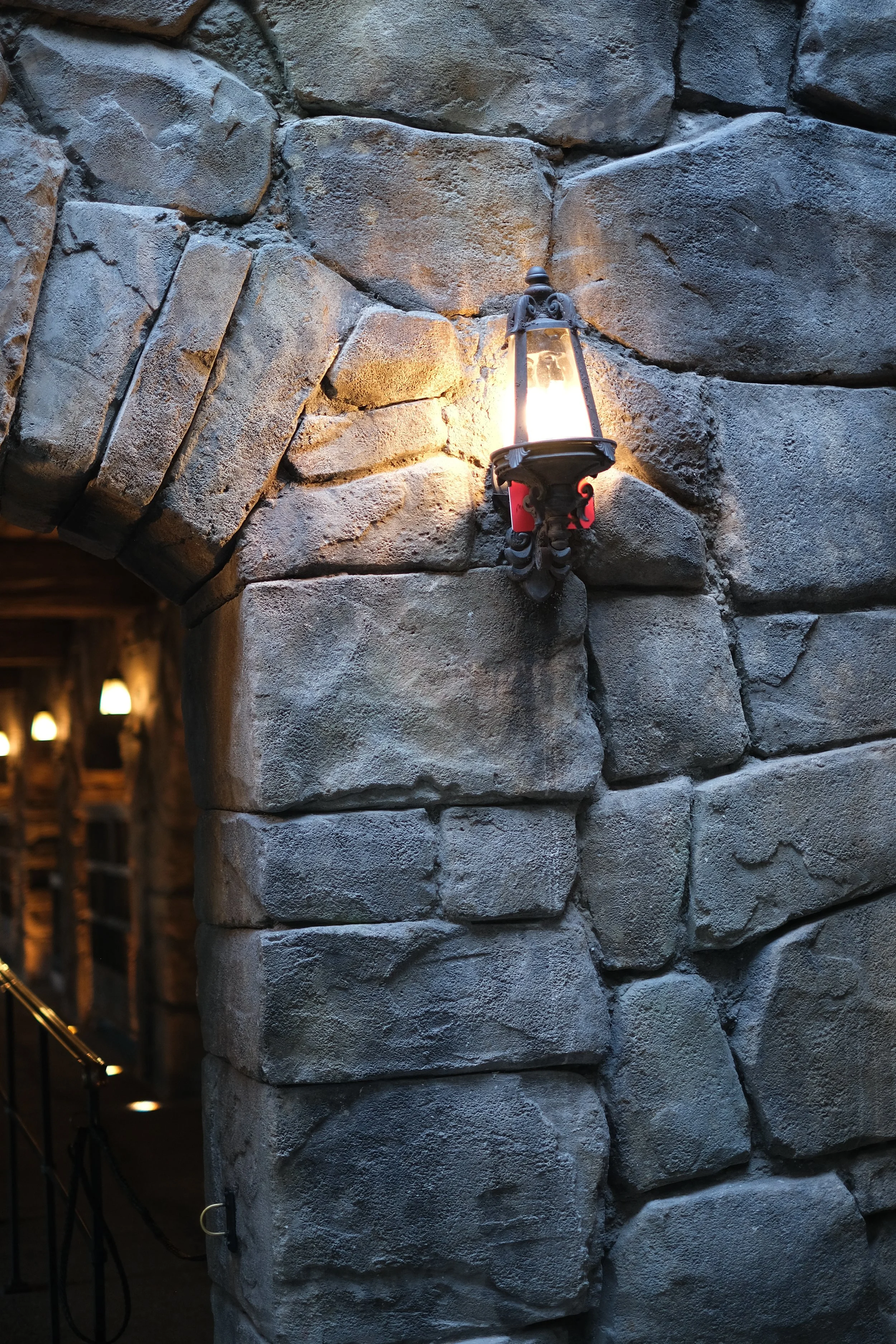
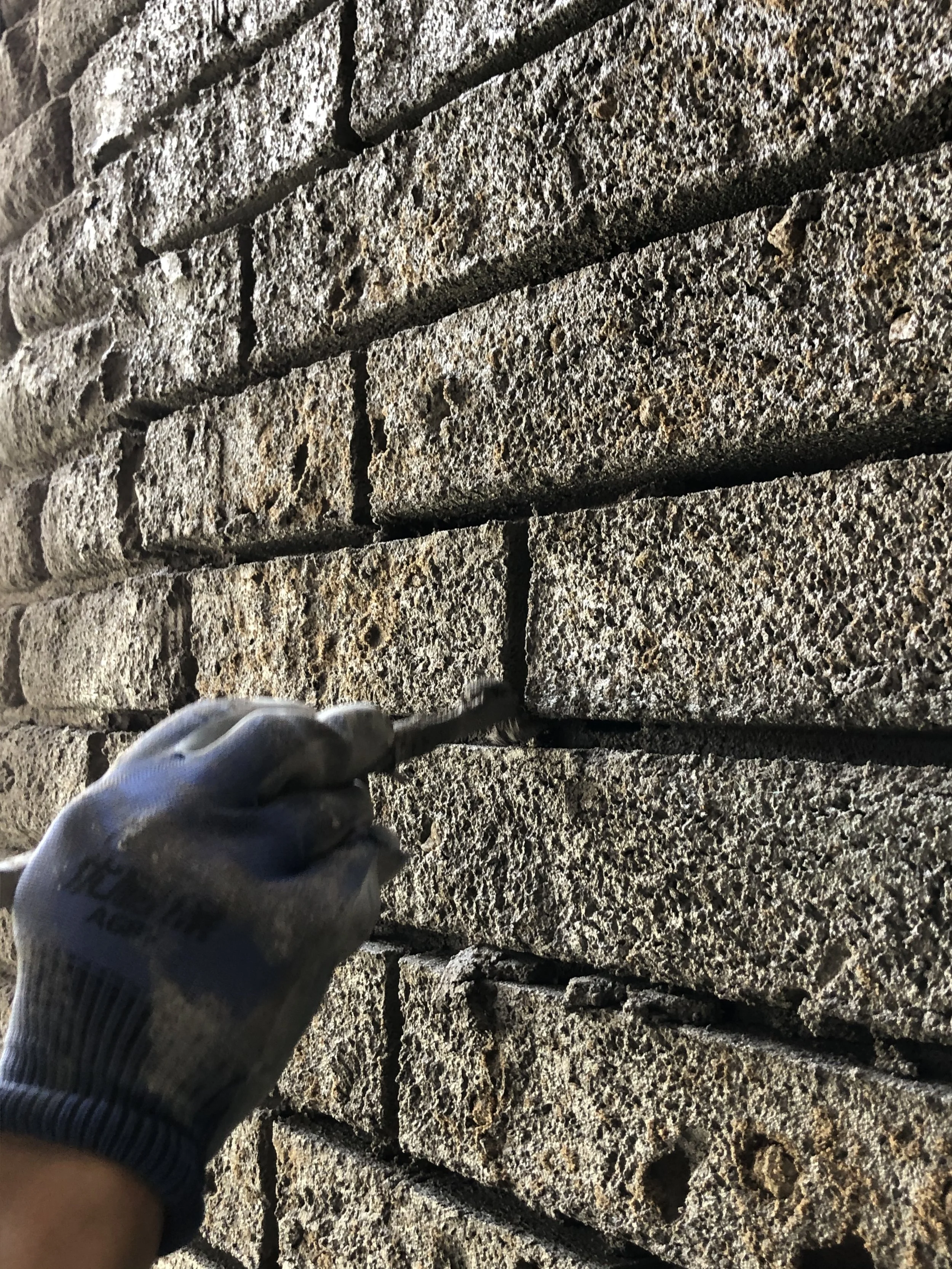
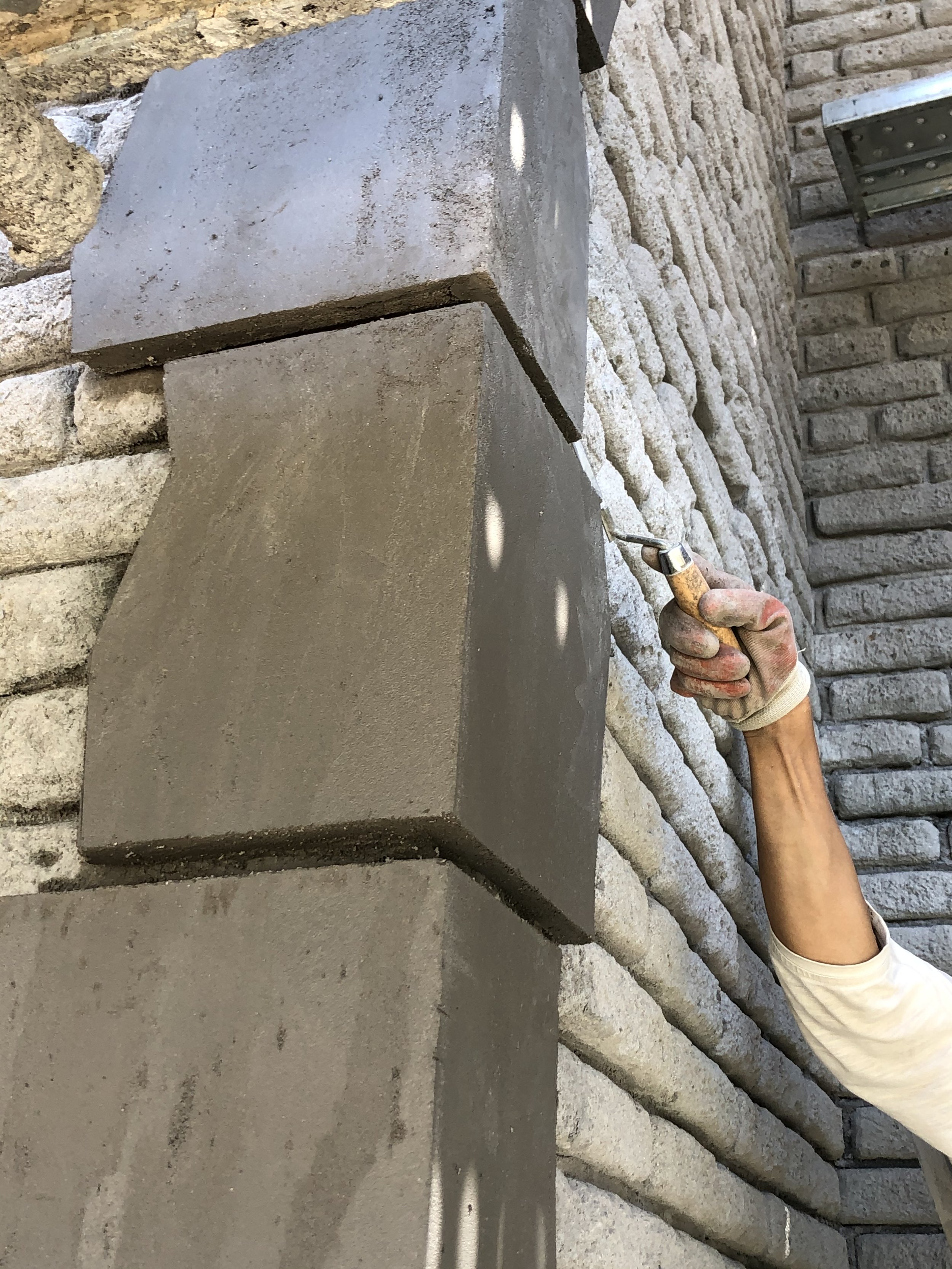
Thick-build systems represent the signature craft of vertical cast-in-place work in themed construction. Applied in layers ranging from one to three inches, these cementitious mixes, often referred to as themed character plaster, or TCP, provide enough depth and body for artists to sculpt bold forms, deep textures, and expressive details directly onto the substrate.
This is where vertical CIP concrete becomes truly three-dimensional. The material is placed with intention, shaped while still plastic, then carved and tooled with precision. In the hands of a skilled artisan, thick-build plaster behaves like a hybrid of clay and stone, allowing for sweeping gestures, delicate detailing, and everything in between.
Each surface carries a uniqueness that prefabrication can rarely achieve; every strike of a trowel and every carved edge reflects the environment, the design intent, and the human hand.
Thick-build systems are used to create:
• Rockwork, boulders, and natural formations
• Tree trunks, roots, and organic growth patterns
• Masonry walls, ruins, brick, stacked stone, and block
• Ancient architectural motifs such as temple façades
• Carved ornamentation, columns, and architectural relief
• Statues, sculptural features, and scenic elements
This is the material language most closely associated with immersion. For someone to instinctively believe the stone is centuries old or the tree roots are gripping the earth, they are experiencing the power of thick-build cast-in-place concrete.
4. Substrates and Structural Logic
CASTO ©
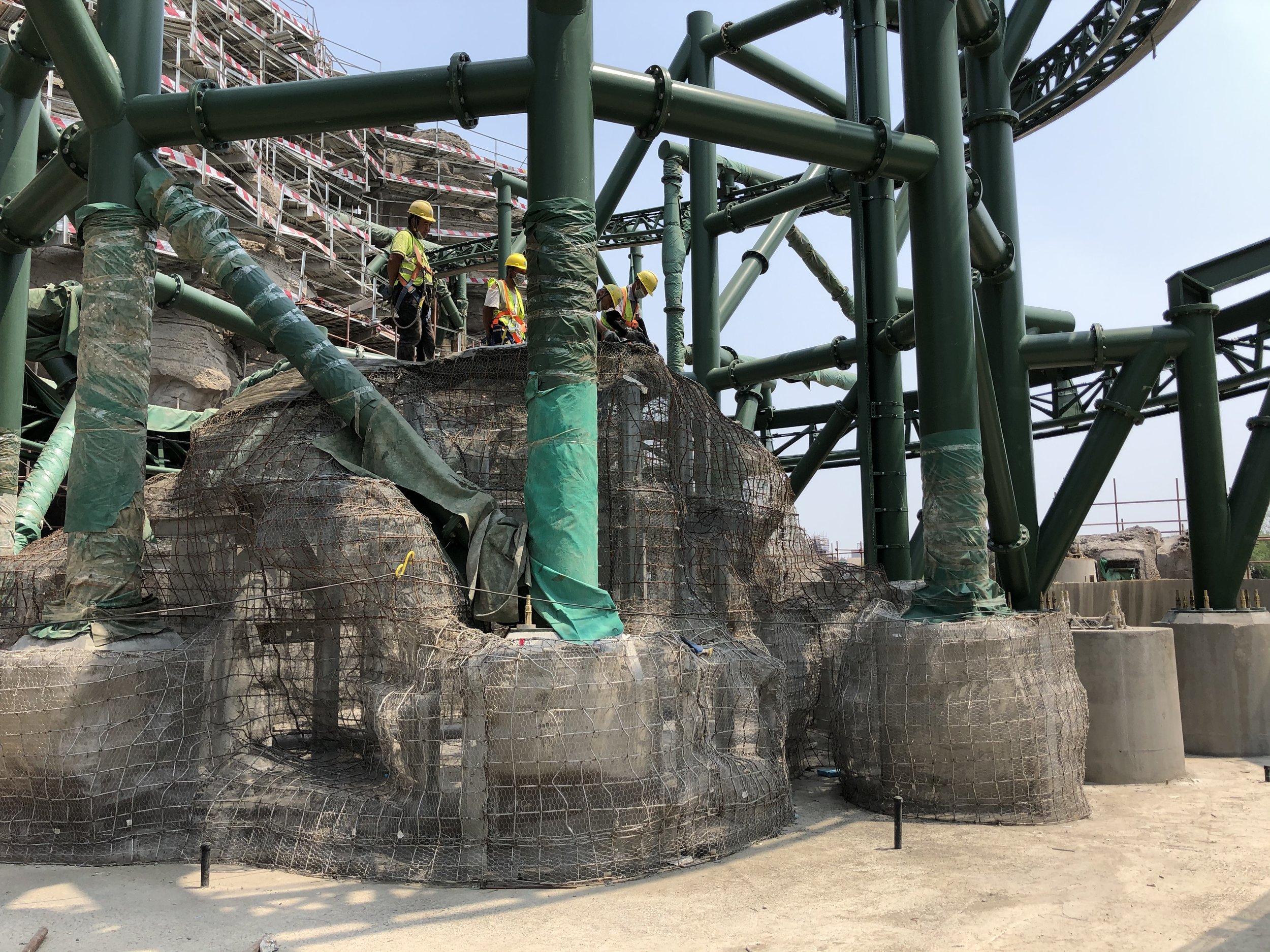
While the creativity of these systems is great the structural integrity depends entirely on the strength of what it bonds to. Common substrates include:
Structural concrete
CMU
Shotcrete shells
Steel frames with expanded metal lath and scratch coat
Foam-and-armature hybrid systems
Block cores with reinforced steel
And this is where we must emphasize a reality the public rarely sees:
CASTO ©
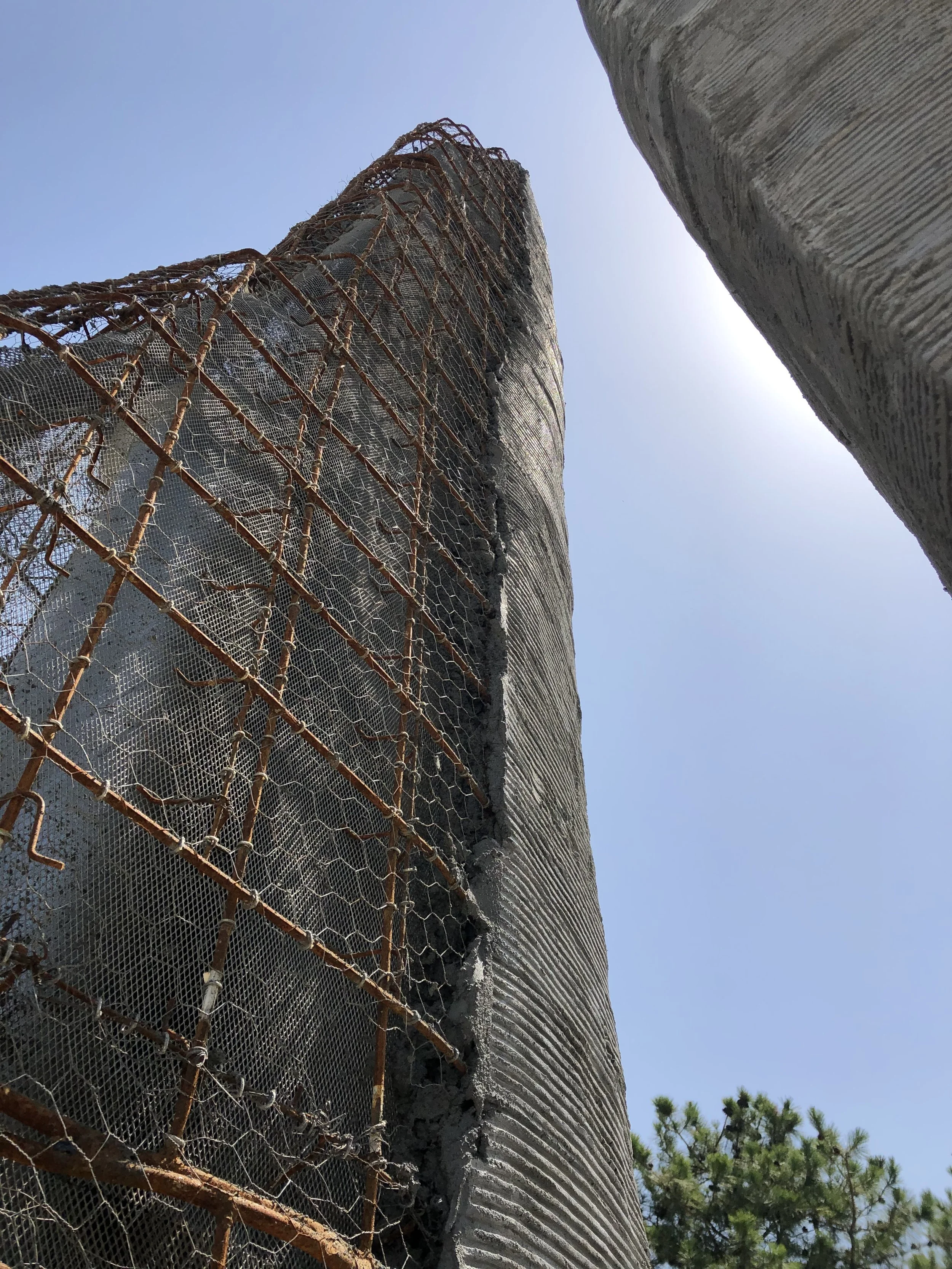
Cementitious systems are heavy. Very heavy.
Even when formulated as “lightweight plaster,” themed character plaster, vertical overlays, and thick-build systems carry substantial mass, especially when applied across large footprints.
This weight demands serious structural planning.
That includes:
Large steel frameworks
Deep foundations
Extensive rebar cages
Robust lathe anchorage
Properly spaced supports
Redundancy to manage dynamic loads
The thicker the system, the heavier the build, the more significant the structure behind it must be.
This often influences:
Available footprint
Clearances
Budget
Engineering strategy
Constructability approach
Vertical work is not only artistic; it is fundamentally structural which is a limitation that must be considered and must not be overlooked.
5. Reinforcement and Support Systems
CASTO ©
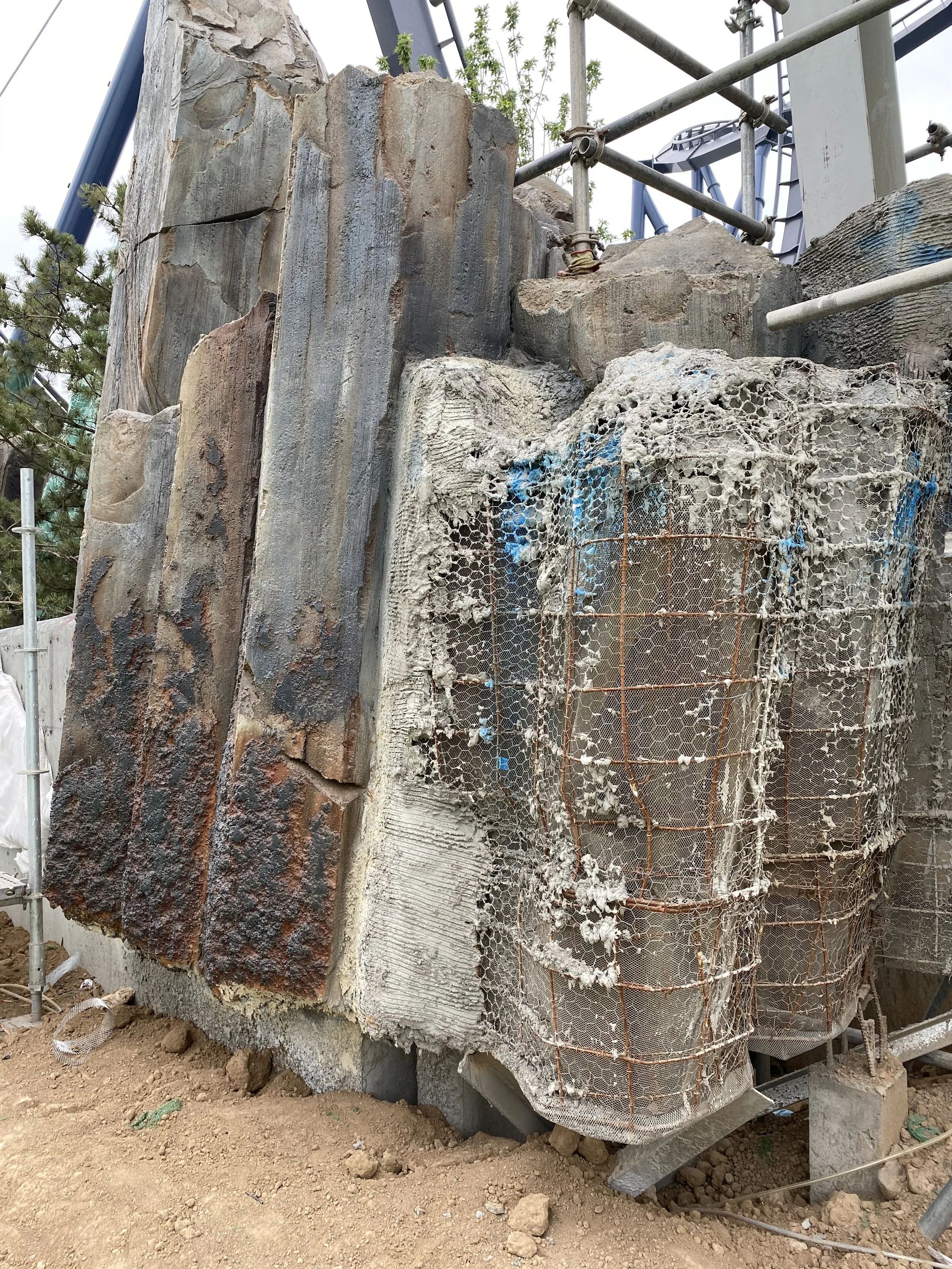
Because of the weight and complexity of cementitious materials, vertical CIP requires multiple reinforcement layers working together:
Rebar, mesh, and wire fabric
To distribute load and control cracking.Expanded metal lath
To provide mechanical grip for overlays and thick-build plasters.Anchors, clips, and ties
To lock the lathe back into the structural frame.Armatures and steel frameworks
To hold sculptural shapes, cantilevers, and overhangs.Substrate preparation
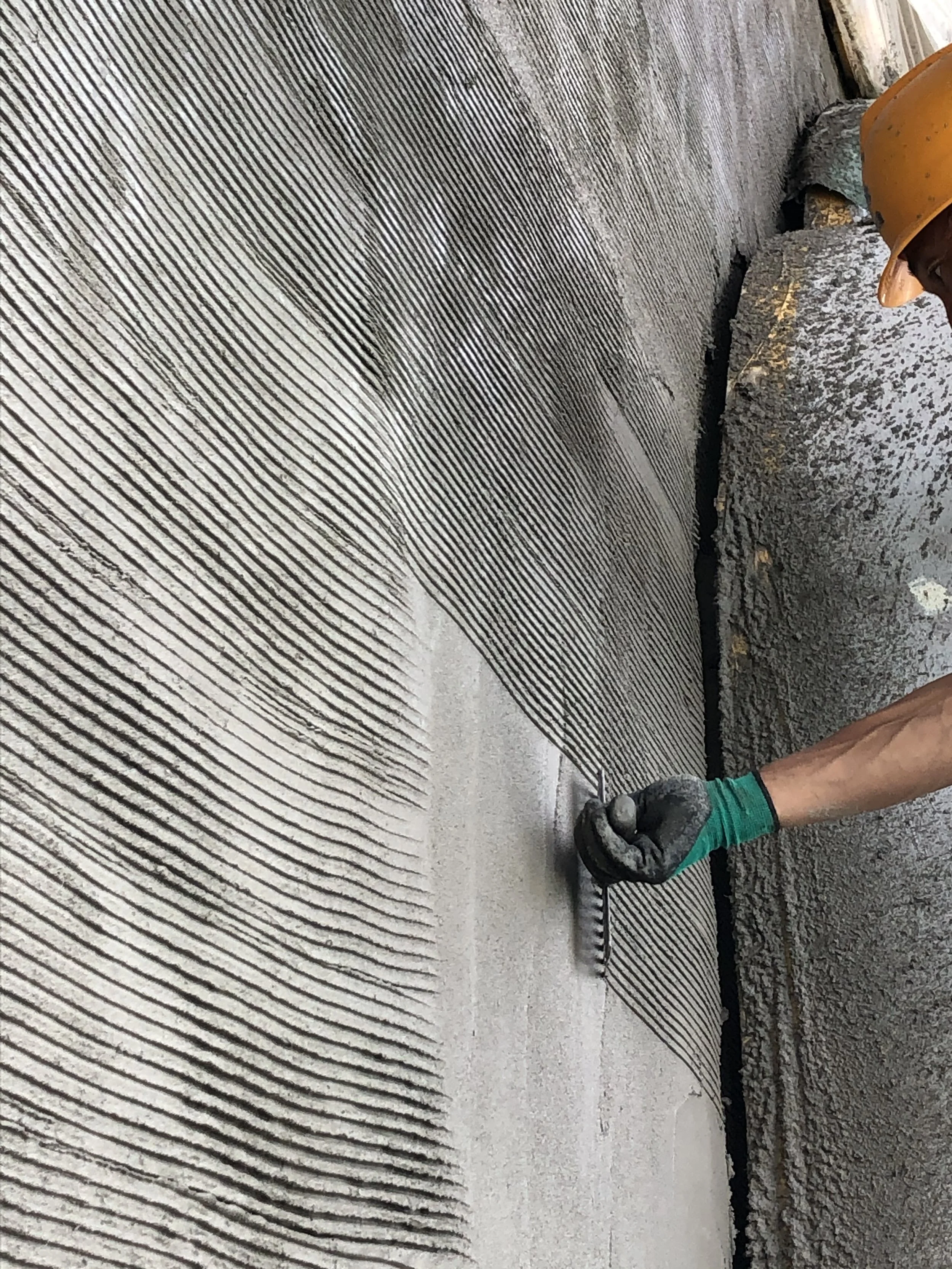
Scratch coats, keying, scoring, and proper curing to ensure long-term adhesion.
Reinforcement is not optional, it is the backbone that allows vertical material to sit safely, permanently, and predictably on a wall.
This is the world that precedes the artistry.
6. The CASTO Creative Perspective
CASTO ©
At CASTO Creative, vertical cast-in-place is a discipline we treat with equal parts craft, engineering, and respect.
We teach that vertical CIP is:
A technical trade
A sculptural art form
A structural system
A storytelling surface
CASTO’S informed path forward:
Build strong substrates
Reinforce correctly
Apply scratch and body coats
Sculpt, carve, and model thematic surfaces
Understand timing, curing, and material behavior
Vertical cast-in-place is not simply a method; it is an approach to immersive design that values durability, creativity, and realism.
9. Closing & Teaser for Part 2
Vertical cast-in-place work remains one of the most expressive and powerful tools in themed construction. It bridges engineering and artistry, transforming cementitious materials into believable rockwork, architecture, and scenic worlds.
But the industry is evolving fast.
Our next CASTO Corner article will dive into innovations in vertical systems. We will explore how emerging materials, fabrication strategies, and hybrid construction approaches are reshaping what vertical work can be.
Part 2 is where we look ahead toward lighter, smarter, more efficient vertical solutions that still honor the craft.
