
Past Meets Present: Concrete Repair in Historic Restoration
How to Respect the Past While Building for the Future
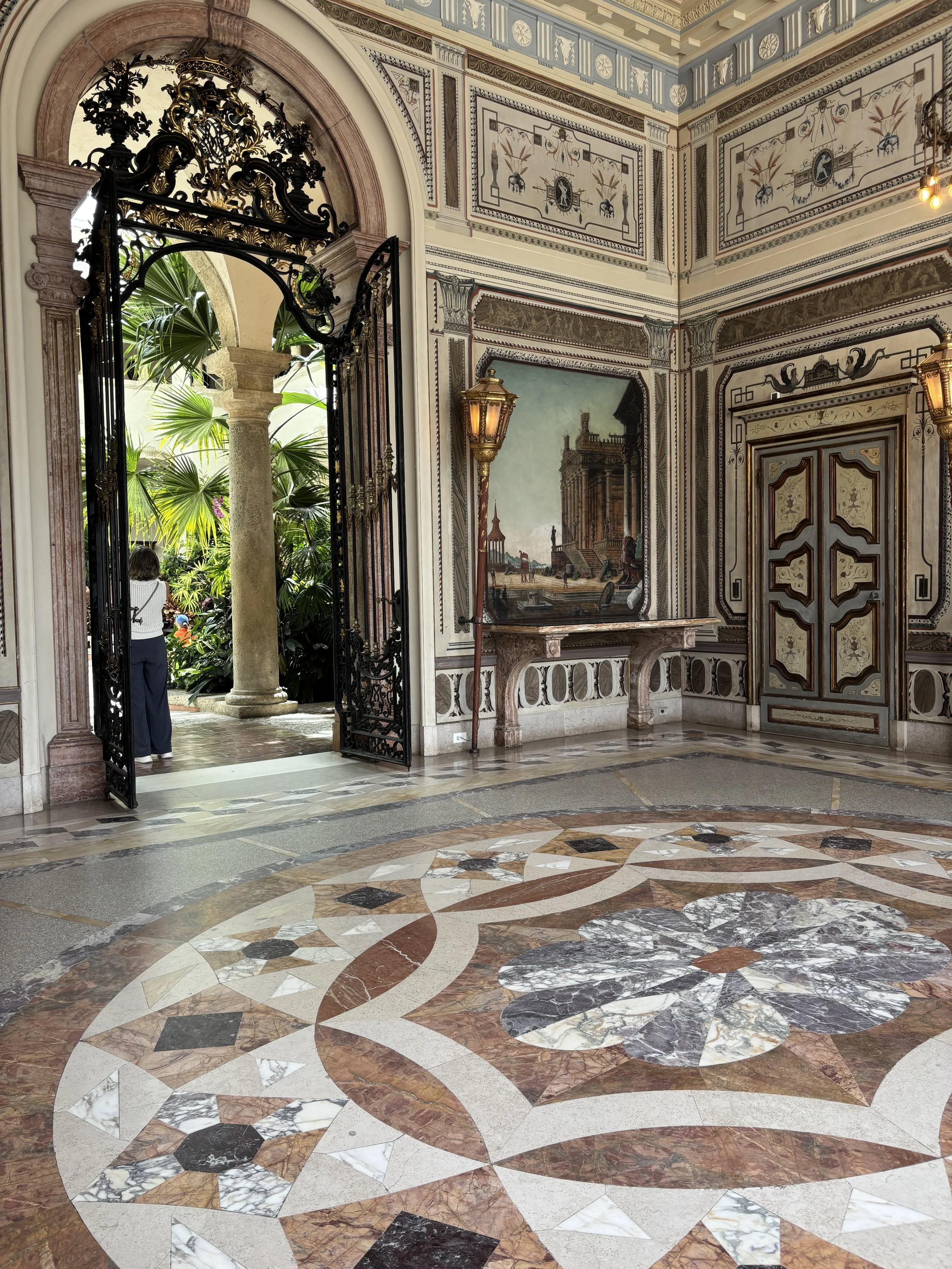
CASTO ©
I. Introduction: Why Repair Is Sustainability
Concrete, masonry, lime based mortars, and cementitious plasters are some of the oldest building materials known to civilization. Their lineage stretches back to the Roman Empire and even earlier, to the ancient island of Crete where the earliest forms of concrete were first documented. Since then, every era of humanity has adapted these materials to build aqueducts, temples, bridges, cities, churches, and civic landmarks that still stand today.
Restoring these structures is inherently sustainable. Instead of replacing historic buildings or tearing them down to start over, repair extends the life of what already exists. It preserves embodied carbon, protects cultural identity, and safeguards history. Restoration is far more than a cosmetic pursuit. It is a form of stewardship that honors the craftsmanship, culture, and intention woven into each structure.
The past teaches us durability, meaning and culture, while the present offers new systems, materials, and scientific understanding. The challenge in every restoration is striking the balance between honoring original construction and providing the level of performance that modern environments demand.
“Repair is sustainability in its purest form. Every preserved structure is the story of our past saved from demolition.”
II. Context: Concrete’s Role in Preserving Cultural Landmarks
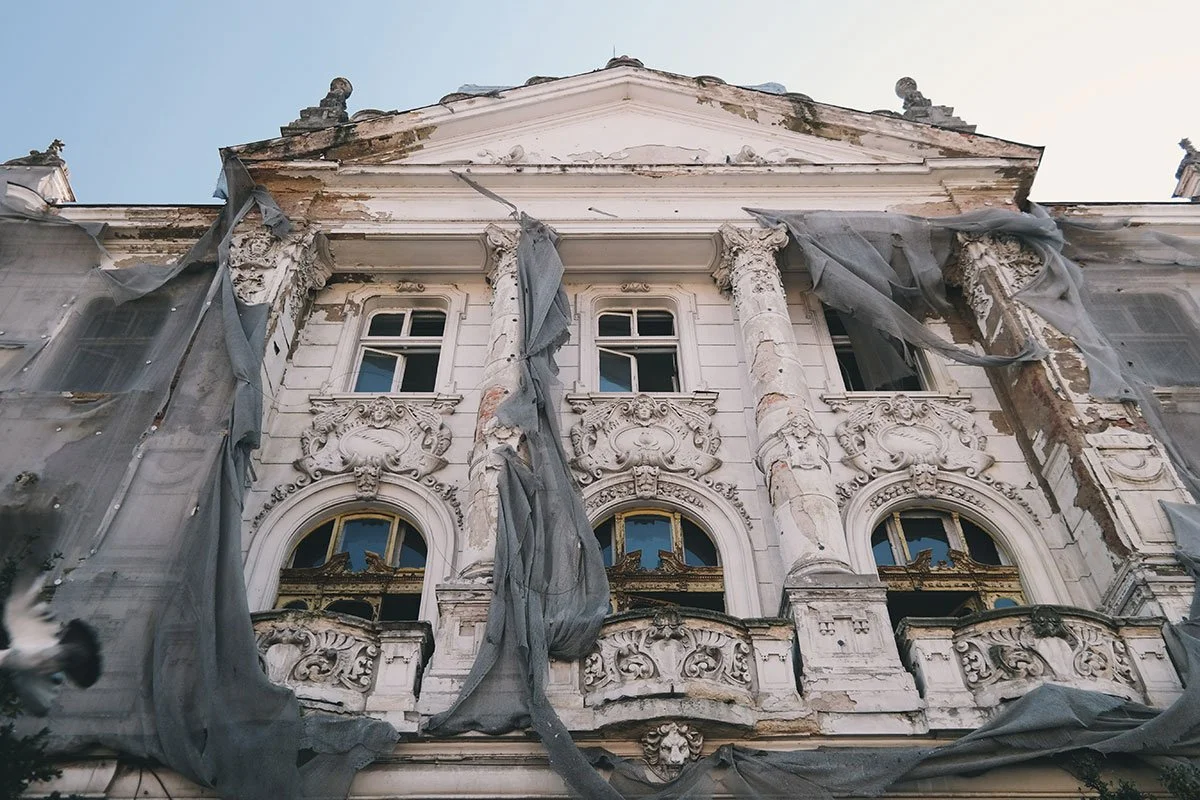
In the United States, concrete sits at the heart of twentieth century construction. Many landmarks from the late 1800s through the early and mid 1900s were built with concrete using regional sands, aggregates, and cement blends that varied dramatically from one city to another. Mediterranean Revival civic buildings, WPA era public works, and early modern parks all relied on concrete for its durability, formability, and expressive potential.
After decades of sun, salt, water, movement, and environmental exposure, these structures begin to reveal their age. Preserving them responsibly requires a clear understanding of the way historic concrete was made and placed. It means studying original craftsmanship, recognizing local material differences, and selecting repair systems that do not overpower the character of the original construction.
Preservation work is always a negotiation. The goal is to match the history and story of the surface while integrating modern materials that protect, reinforce, and extend its service life.
III. The Challenge: Performance and Preservation
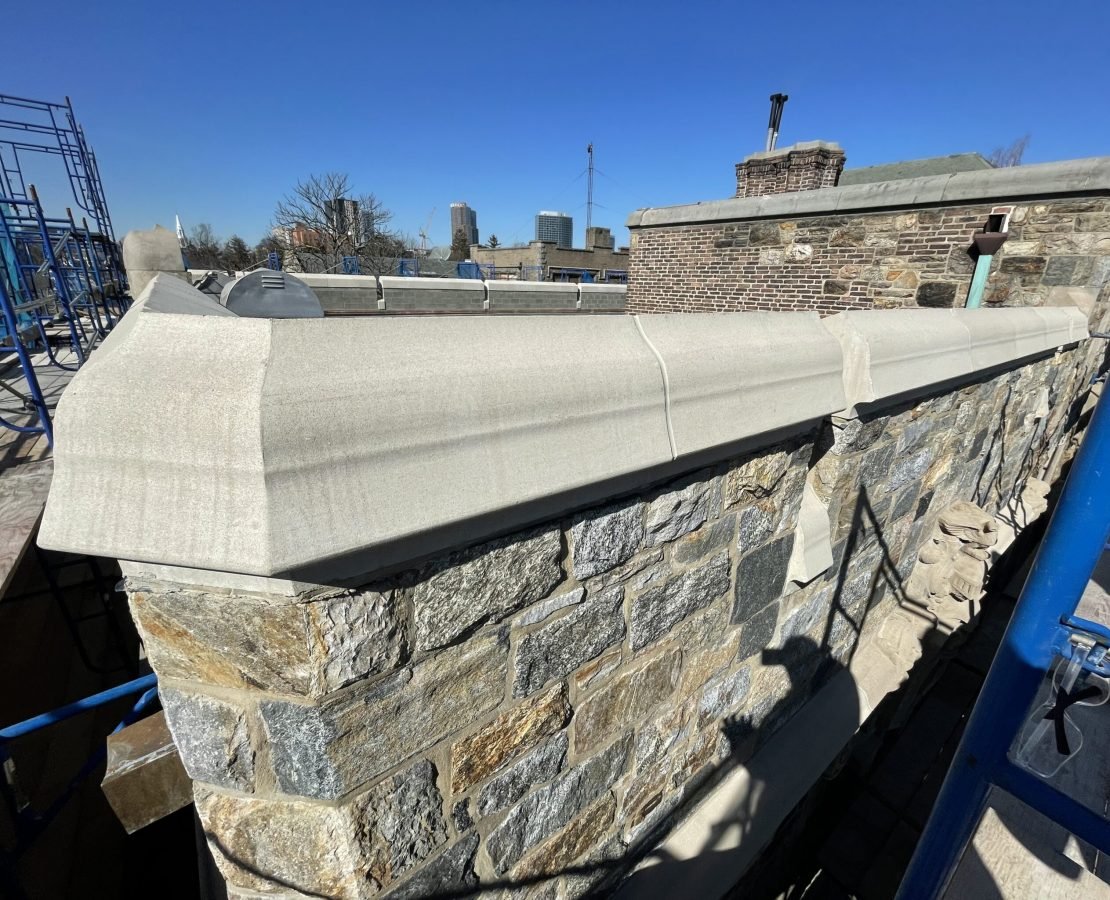
CASTO ©
Restoration specialists constantly stand at the intersection of past and present. Historic structures were built with materials that breathe, move, and weather naturally. Modern repair materials are engineered for strength, density, and high performance. These differences can create conflict if not handled carefully.
Modern coatings, mortars, and repair systems outperform historic materials, but they do not always match traditional textures or colors. They may also restrict vapor movement or add rigidity to a structure designed to flex and release moisture. Preservation boards and municipalities often have detailed requirements for color, aggregates, sheen, and texture to ensure that repairs remain consistent with the aesthetic of the original era.
The risk of over repair lies in modernizing the surface to the point that its history is erased. The risk of under repair lies in leaving damage unaddressed and allowing deterioration to accelerate. Successful restoration requires integrating modern chemistry without changing the visual or material identity of the structure.
This balance becomes even more complex when working within active community spaces such as churches, museums, parks, and public plazas. These sites must remain functional while undergoing restoration, and they often carry deep emotional significance for the communities that use them.
IV. Understanding Historic Concrete: Composition, Aging, and Failure Modes
Historic concrete was not mixed, placed, or finished the way it is today. Earlier generations often used locally sourced aggregates, regionally unique sands, and lower strength cements. Some municipalities relied on proprietary blends or indigenous stone, creating concrete that reflected its geographic context.
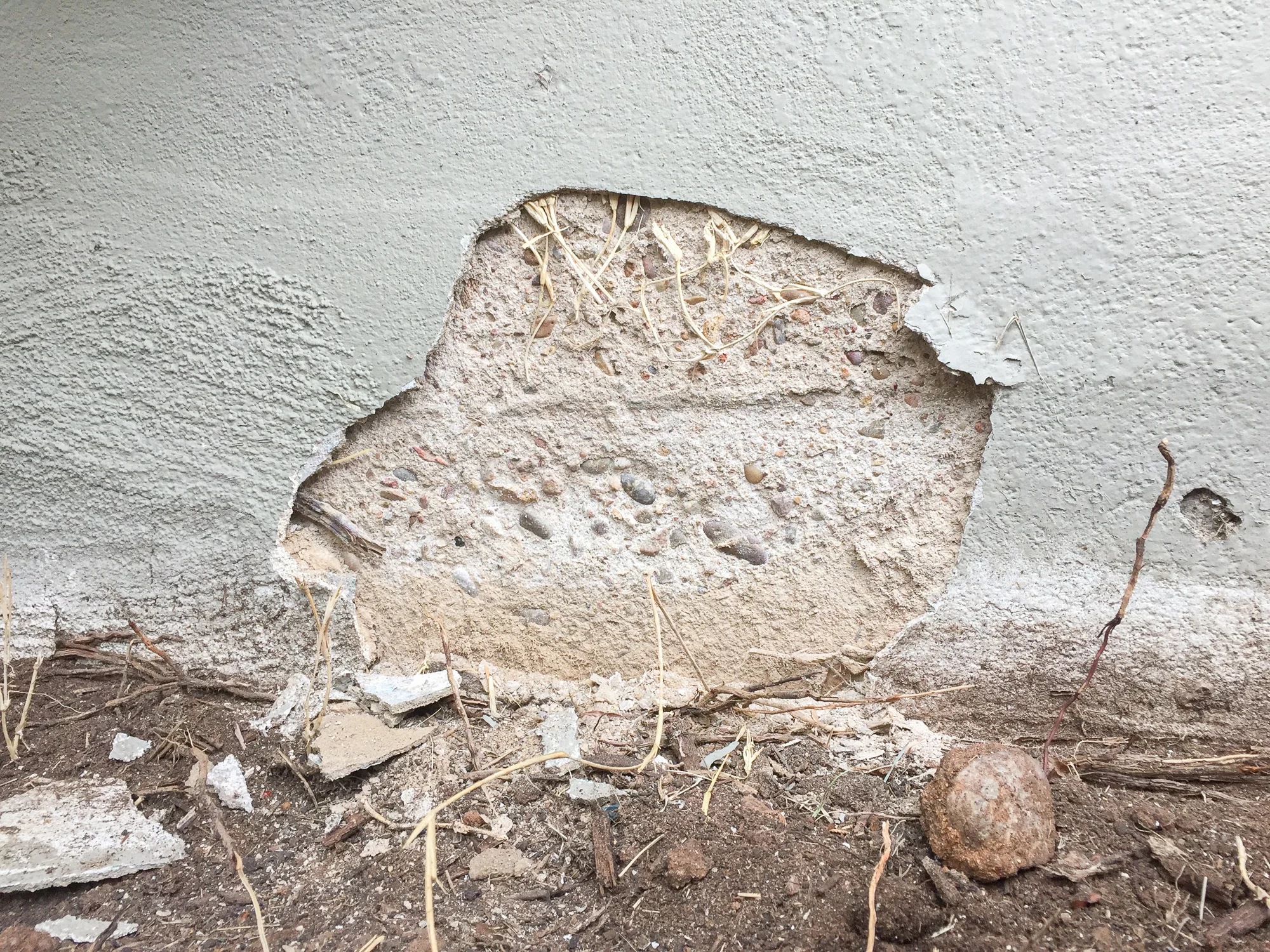
Aging introduces its own challenges. Carbonation reduces alkalinity and weakens reinforcement. Chloride intrusion from salt exposure slowly corrodes embedded metals. Settlement, tree roots, and thermal cycles create cracking while water and salt erosion degrade the cement paste at the surface. Understanding these core principles will guide you to making better decisions while addressing restoration needs.
Additionally, understanding vapor movement is essential. Older lime based mortars, plasters, and brick structures rely on the absorption and release of moisture. These systems are designed to breathe. They are ever in search of balance, releasing moisture when the conditions are dry and absorbing them when humidity is present. If they are coated or repaired with modern materials that block vapor, moisture becomes trapped within the structure. Over time this saturated interior weakens the brick, mortar, and concrete, causing decay and irreversible damage.
A classic example occurs when historic stucco or Venetian plaster is repaired with modern microtoppings or coating systems that are designed to behave as vapor barriers. Instead of allowing moisture to pass through the material and release gradually, the barrier traps water inside the wall. The structure then becomes permanently wet, leading to softening, crumbling, and eventual loss of material integrity.
Preservation requires choosing materials that work with the original system, not against it.
CASTO ©
Technical evaluations often include:
carbonation depth testing
petrographic analysis
documentation of aggregate exposure
adhesion and bond testing
moisture and salt testing
These assessments ensure that the repair system will not unintentionally harm what it was meant to preserve.
V. Guiding Principle: Respect the Past and Reinforce for the Future
Restoration demands discipline. Do only what is necessary. Match only what you touch. Strengthen where appropriate. Each repair becomes a new layer in the building’s continuous timeline.
Modern materials must work with the old, allowing the building to breathe, move, and perform as originally intended. Compatibility, breathability, and reversibility are central preservation values.
Respecting the past does not mean freezing a structure in time. It means elevating its essence, supporting its longevity, and adding the present without erasing the history that came before.
“Historic restoration is a conversation between past craftsmanship and modern science.”
VI. Methods and Strategies in Historic Repair
Preservation is as much documentation as it is repair. CASTO recommends recording every step of the process so that future craftsmen understand what was done and why.
A. Assessment and Forensics
detailed condition mapping
review of historical drawings or documentation
photographic surface mapping
moisture testing
salt intrusion and efflorescence analysis
B. Surface Preparation
gentle removal methods such as hand scraping or soft grinding
low pressure washing
avoiding aggressive profiling
matching CSP profiles consistent with the original era
C. Mortars and Repair Compounds
lime or lime modified repair mortars
polymer modified repair compounds for structural needs
matching aggregates, sands, and pigments
avoiding over strengthening that compromises original material
D. Crack Repair and Joint Integrity
respecting original control and expansion joints
distinguishing structural from non structural cracks
stitching or injection methods that maintain historic appearance
E. Surface Finishing and Coatings
breathable sealers rather than film forming coatings
carefully matching sheen, reflectivity, and color
using natural pigments to align with original finishes
VII. Case Study: Venetian Pool Restoration, Coral Gables, Florida
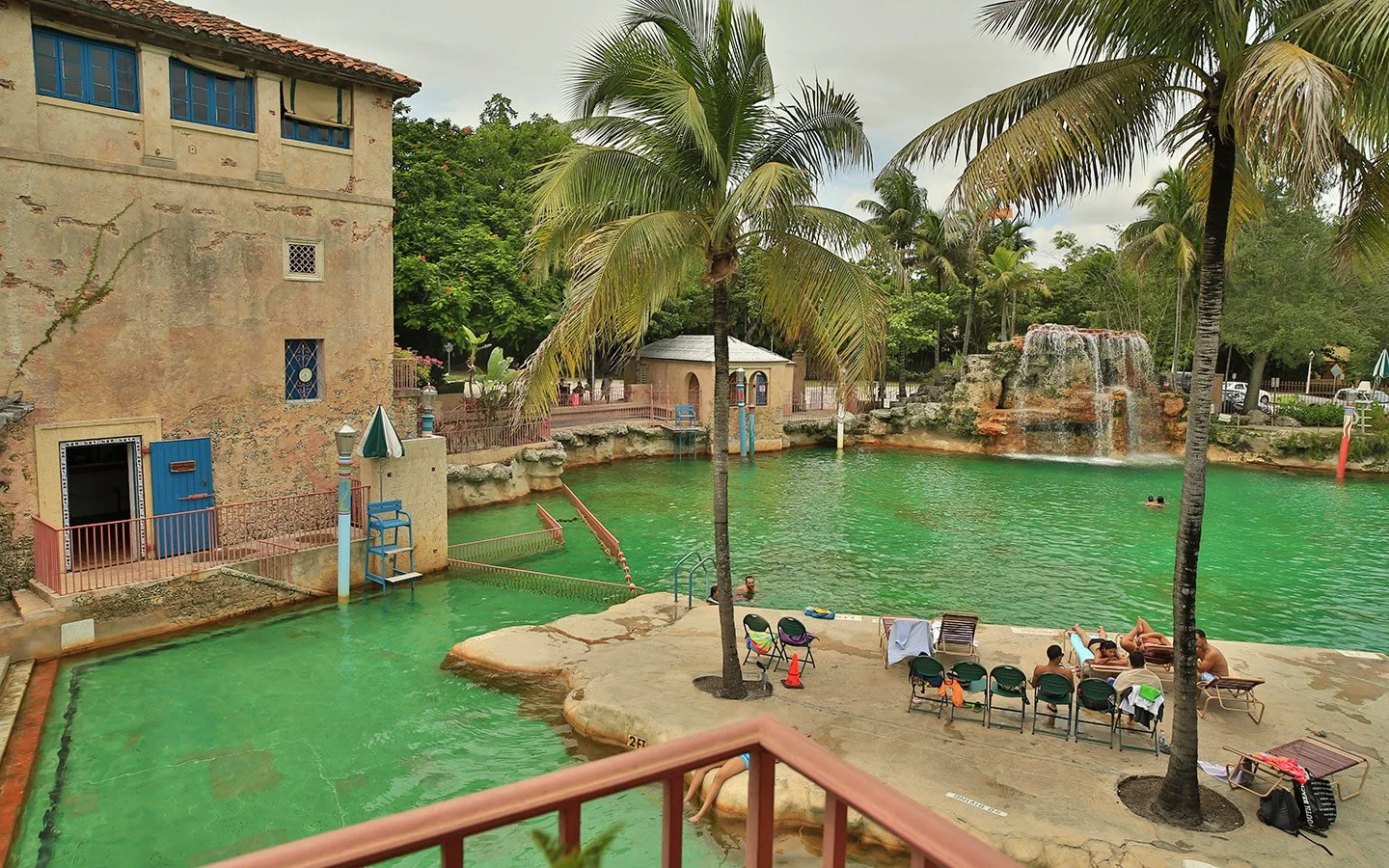
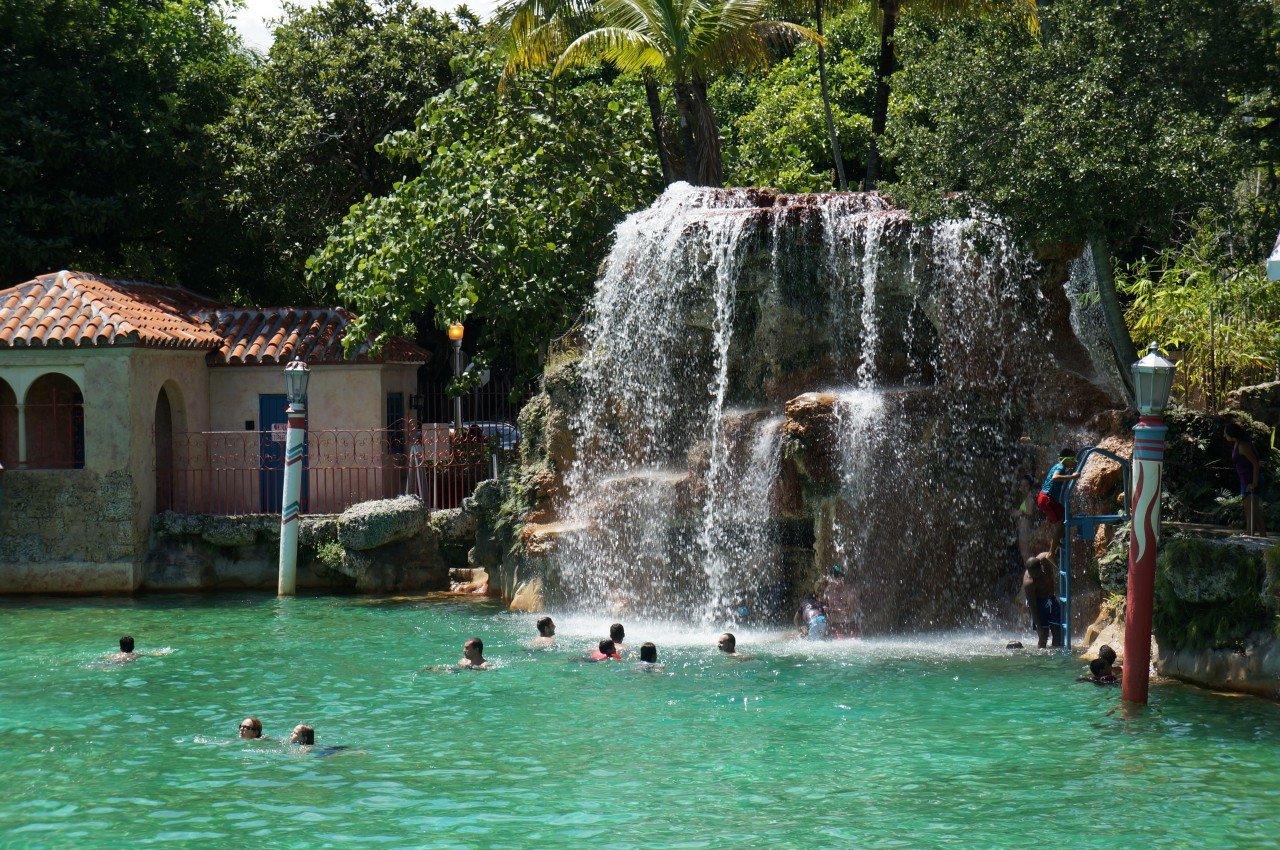
Few historic sites illustrate the intersection of engineering, artistry, and preservation as vividly as the Venetian Pool in Coral Gables. Built in 1923 and carved directly out of the native coral rock, this public pool is the only swimming facility in the nation listed on the National Register of Historic Places. Its Mediterranean Revival architecture, dramatic coral stone features, Venetian inspired bridges, and spring fed waters have made it a cultural landmark for nearly a century.
A. The Place
The site began as a limestone quarry that supplied stone for early Coral Gables construction. When the quarry was exhausted, architect Phineas Paist and artist Denman Fink transformed it into a public oasis that blended natural geology with Mediterranean romanticism. Coral rock grottos, loggias, and lush landscaping surround nearly eight hundred thousand gallons of water drawn from the Biscayne Aquifer through a spring fed pumping system.
The water is naturally filtered through the aquifer and recirculated daily. During high use seasons, the pool is drained each night, cleaned, and refilled the next morning with fresh spring water. This unique hydrological cycle places significant demands on the concrete shell and surrounding structures.
B. The Challenge
After decades of service, the Venetian Pool faced deterioration caused by water movement, humidity, salt exposure, hydrostatic pressure, and natural aging. Historic surfaces of coral rock, oolitic limestone, stucco, and hand crafted plaster required exact color, aggregate, and texture matching. Previous patches and inconsistent repairs left the surface uneven and visually fragmented.
The ongoing restoration project focuses on structural repairs, surface stabilization, waterproofing improvements, pump and filtration upgrades, and preservation of historic finishes. Every decision must honor the historic character while ensuring the facility can continue to serve the community safely.
C. CASTO’s Role
CASTO ©
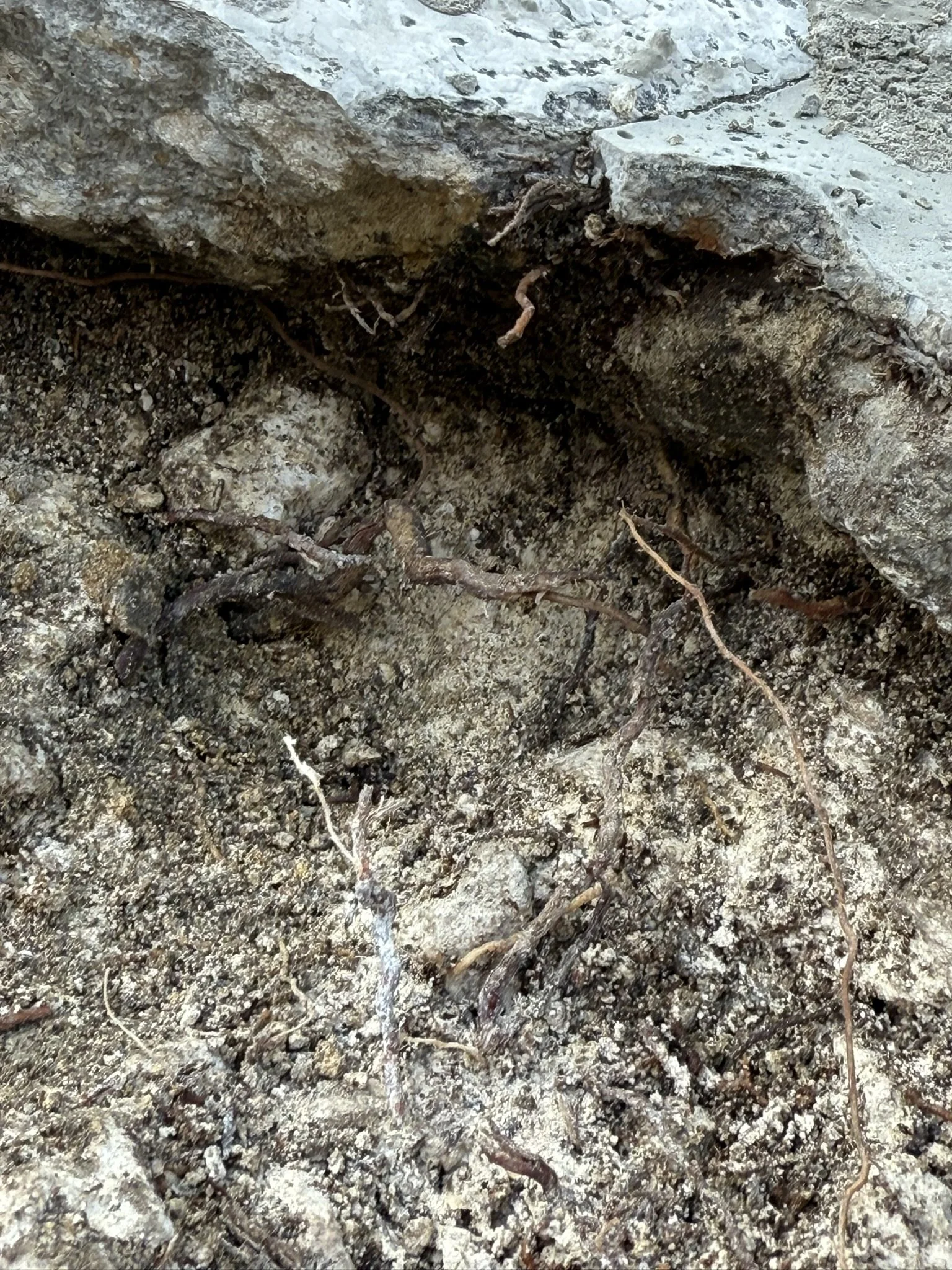
CASTO was brought in to assist with specialty repair treatments that required advanced material understanding. The team first visited the site approximately one year ago to conduct analysis, evaluate the conditions of the aging concrete and plaster, and create sample repair systems that matched the historic material as closely as possible.
Over time, CASTO was invited back to perform specialty work that required precise craftsmanship. This included surface repair, grinding and re-profiling, crack stitching, patch consolidation, and application of cementitious resurfacing to revive deteriorated hardscape areas while maintaining the original texture and visual language. CASTO Creative’s involvement was intentional and measured, providing expert support within the broader restoration effort.
D. Why It Matters
The Venetian Pool is more than an engineering accomplishment. It is a living piece of community identity, an architectural treasure, and a testament to the cultural vision that shaped Coral Gables. Preservation work ensures that the stories embedded in its coral stone and hand crafted details remain intact for the next generation to experience.
VIII. Lessons from the Field: Balancing Stewardship and Performance
Every historic structure is unique. The material tells the craftsman how to repair it. The most successful restorations feel nearly invisible, allowing the original structure to continue speaking without interruption.
Design for longevity rather than novelty. Prioritize compatibility over convenience. Understand the science but honor the story. Preservation is both a technical craft and an act of respect.
IX. The Informed Path Forward
Restoration is sustainability because it preserves embodied energy, cultural heritage, and architectural identity. Modern materials, used thoughtfully, can extend the life of historic structures without altering their character. Innovation should amplify authenticity, not overwrite it.
Education, documentation, and collaboration remain at the heart of this work. The responsibility of craftsmen, specifiers, and preservation experts is to bridge past and future with integrity.
X. Final Thought
Historic concrete carries the fingerprints of those who built before us. Our responsibility is to preserve their work with care, understanding, and craftsmanship, ensuring that the places we inherit continue to stand with dignity for generations to come.
